
Buildin’ Even More Bucks: How Construction Meets the Search for Lost Treasure
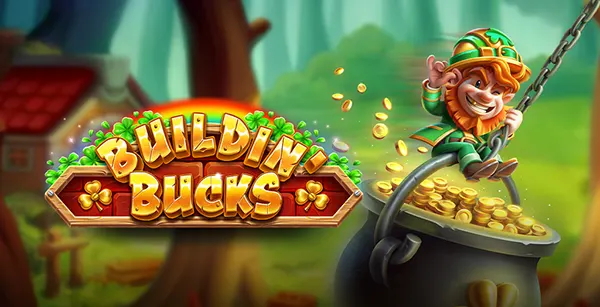
Buildin’ Even More Bucks takes an unusual approach to the familiar fantasy-treasure theme by placing the search for riches in the middle of a busy building project. Released by Play’n GO on 11 June 2026, the video slot follows Lenny as he looks for his family’s long-lost treasure with help from Woody Elf, Grout Bricky and Fairy Mary. Instead of treating construction equipment merely as background decoration, the game connects timber, bricks, gold frames and building work directly with the progress of the treasure hunt. The result is a light fantasy story in which every stage of construction suggests that the crew is getting closer to something valuable. Its basic layout remains easy to understand, while the characters and building features give the game a clear identity without requiring players to follow complicated rules or a dense storyline.
A Construction Site Built Around Lenny’s Lost Treasure
The central idea behind Buildin’ Even More Bucks is straightforward: Lenny believes that his family’s missing treasure is somewhere within reach, but recovering it requires considerably more work than following a map to a marked spot. He recruits three companions for the job and turns the search into a mixture of digging, building and opportunistic teamwork. This gives the construction setting a reason to exist within the story. Wooden structures, brickwork and golden materials are connected to the crew’s work rather than appearing as unrelated symbols added simply to create a visual theme. The treasure remains the objective, while construction represents the process needed to reach it.
Play’n GO presents Lenny as the schemer at the centre of the group. He wants the treasure, understands that he needs assistance and appears quite happy to let other characters handle much of the physical work. That small element of self-interest gives the story more character than a standard tale in which several heroes cooperate without disagreement. There is always a suggestion that everyone may be working towards the same buried fortune for slightly different reasons. Treasure maps, tools, construction materials and fantasy characters therefore fit into a single situation rather than competing for attention as separate themes.
The visual progression from ordinary materials towards gold is particularly important. Wood feels temporary and practical, brick suggests a stronger and more developed structure, while gold naturally represents the valuable end of the process. This creates an easy visual language that does not depend on lengthy explanations. A player can see that a gold frame represents a more advanced state than a wooden one even before examining every detail of the rules. For a game built around lost treasure, that progression is also logically connected with the story: the further the work develops, the closer the imagery moves from everyday construction towards the wealth Lenny is trying to recover.
How the Crew Turns Materials into Story Elements
Woody Elf, Grout Bricky and Fairy Mary are more than three high-value characters placed on the reels. Each is associated with a different construction material, giving the crew clearly separated jobs. Woody Elf is linked with Wood Frames, Grout Bricky with Brick Frames and Fairy Mary with Gold Frames. It is a simple arrangement, but it helps turn what could have been an abstract frame mechanic into something that belongs naturally to the cast. Instead of the game suddenly changing frame colours for no apparent reason, different materials are associated with characters whose roles support the idea of a building crew.
Woody Elf represents the earliest stage of construction. Wood is the most basic of the three materials, so his role suits the idea of laying foundations and beginning the job. Grout Bricky moves the imagery towards more substantial construction through brick, while Fairy Mary introduces the fantasy element more strongly through gold. The transition from one material to another therefore feels like an escalation in both building quality and treasure value. This matters because the player does not need to remember a complicated hierarchy: wood, brick and gold immediately communicate increasing importance through familiar visual associations.
Fairy Mary also prevents the building theme from becoming too literal. Buildin’ Even More Bucks is officially categorised as a fantasy game, and the crew operates in a colourful fictional setting rather than on a realistic modern construction project. A purely industrial presentation could easily clash with Lenny’s treasure hunt, leprechaun imagery and magical rewards. Fairy Mary provides the connection between manual building work and fantasy, while Woody Elf and Grout Bricky keep the construction aspect recognisable. Together, the three characters allow the game to shift between tools, building materials, hidden wealth and magic without making those elements feel completely unrelated.
How Building Mechanics Carry the Treasure Hunt Forward
The regular game uses five reels and 243 ways to form winning combinations, providing a relatively familiar foundation for the more distinctive features. Hard Hat Scatter symbols are important because they can move the action away from ordinary spins and towards the construction-related features. The Double Wheel can provide character features or fixed prize outcomes, while the stronger wheel level becomes available through an upgrade segment. Three or more Hard Hat Scatters lead to the main Magic Spins feature. The important thematic point is that these elements do not abandon the building idea when a feature starts. Instead, the construction work becomes more visible as the game progresses.
Frames are the clearest example of that relationship. Depending on the feature and character involved, positions can be associated with wood, brick or gold structures. These materials are not simply alternative colours for the same graphic. They indicate different stages within the building process and eventually connect to prize values. By organising the feature around construction materials, the game turns progression into something players can see happening on the reels. A frame that develops from a modest structure towards a more valuable form resembles a building being improved while the crew continues searching for Lenny’s treasure.
At the end of relevant feature sequences, completed framed positions can become structures that reveal prize values. This gives the construction process a defined purpose. The crew is not building simply because the game happens to have a construction theme; the finished structures are part of the reward sequence. Published game information lists different value ranges for wood, brick and gold structures, with the higher material tiers having access to stronger possible values. Outcomes remain random, but the visual hierarchy gives players a clear indication of why improving a structure matters inside the feature.
Magic Spins Make the Worksite Part of the Bonus Story
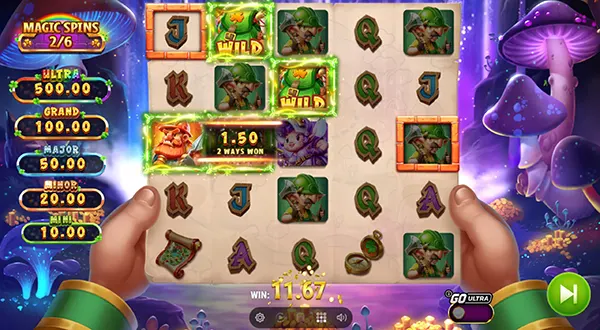
Magic Spins provides the strongest connection between the search for treasure and the construction mechanics. Landing three or more Hard Hat Scatters in the base game activates the feature, after which the reel area expands from the normal format to a 5×5 layout. Six Magic Spins are initially awarded. The number of triggering Scatters also affects the type and number of frames present when the feature begins: three Scatters are associated with Wood Frames, four with Brick Frames and five with Gold Frames. This means the trigger itself helps establish how developed the construction area is at the start of the round.
The larger grid makes the feature resemble an expanded worksite rather than simply a faster version of the normal game. More visible positions give the frames room to become the main focus, while the building materials provide an immediate way of following progress. Magic Spin Coins can also appear within framed positions and add further Magic Spins. This extension mechanic fits the construction story surprisingly well: extra activity can keep the job running for longer, while the existing structures remain relevant to what happens next. It creates continuity between one spin and another instead of presenting each feature spin as a completely isolated event.
The expanded format also increases the number of possible winning ways to 3,125 during Magic Spins. That numerical change is significant, but the feature does not rely on statistics alone to communicate that something different is happening. The larger reel area, visible frames and changing materials do most of the explanatory work. This is useful for players who prefer games that show progress through animation and visual changes instead of requiring constant attention to mathematical information. The central idea remains easy to follow: a larger work area gives the crew more room to build, and the structures created during the feature contribute to the eventual reward sequence.
Why the Construction Theme Feels More Than Decorative
Many treasure-themed slots use maps, coins, chests and explorers without allowing those objects to influence how the game feels. Buildin’ Even More Bucks takes a different route by making the work required to reach the treasure part of its main identity. Lenny has a goal, his companions have specialised roles and the materials associated with them appear inside the feature system. The connection is not particularly complicated, but it is consistent. Building represents progress, stronger materials represent development, and gold represents the point where construction imagery and treasure imagery naturally meet.
The Double Wheel follows the same principle even though it uses a different visual device. Its first level can lead to Woody Elf Spins or smaller fixed prizes, while an upgrade can activate a second wheel containing Grout Bricky Spins, Fairy Mary Spins and larger prize categories. The structure therefore mirrors the broader idea of moving from an initial stage towards more valuable possibilities. The wheel is not literally a construction tool, but its progression follows the same hierarchy established by the characters and their materials. That consistency helps the various bonus elements feel like parts of one game instead of a collection of unrelated features.
The humour also plays an important part in keeping the concept coherent. Lenny is not presented as a heroic archaeologist carefully preserving an ancient site. He is an opportunistic treasure hunter who recruits an unusual crew and puts them to work. This allows hard hats, brickwork and tools to coexist comfortably with fairies, elves and hidden family riches. The setting deliberately favours comic fantasy over realism. As a result, practical questions about why a treasure hunt needs a construction crew are answered by the tone of the game itself: this is a playful building operation led by characters whose ambitions and personalities are as important as the physical search.
What the 2026 Game Design Means for Players
From a practical perspective, Buildin’ Even More Bucks keeps its main systems readable despite having several feature layers. The base game uses a five-reel layout with 243 ways, the wheel provides access to character-related events and fixed prize categories, and Magic Spins creates the larger 5×5 building area. The maximum advertised win is 5,000 times the stake. These figures describe the boundaries of the game, but they should not be mistaken for expected results. A maximum win is a theoretical upper limit, not an indication that a particular session is likely to approach that amount.
The strongest aspect of the design is the way information is communicated visually. Players can recognise the difference between Wood, Brick and Gold Frames without learning an extensive set of specialist terms. Character associations reinforce those differences, while the change to a larger grid makes the main feature immediately recognisable. That does not make the underlying outcomes predictable: the result of each spin and the occurrence of features remain governed by the game’s random mechanics. The construction sequence provides presentation and progression, not a method for forecasting when a particular reward will appear.
As a 2026 release, Buildin’ Even More Bucks shows how a familiar treasure theme can be given a more specific identity by tying the story to the mechanics rather than relying only on scenery. Lenny’s missing family treasure provides the objective, the construction crew provides the characters, and the progression through wood, brick and gold provides a visual measure of development. Magic Spins then brings those ideas together on a larger worksite where frames, extra spins and completed structures become central to the action. For players evaluating the game, the useful distinction is clear: its appeal comes primarily from character-led fantasy, visible feature progression and the unusual combination of building work with a lost-treasure story, while every monetary outcome remains random.
Popular articles
-
 Helios – Triple Sun by Pragmatic Play: How Three Scatter Modifiers Wor...
Released by Pragmatic Play on 14 September 2026, Helios – …
-
 Super Serge by Pragmatic Play: 4,096 Ways to Win, Three Wild Modifiers...
Released in August 2026, Super Serge is a Pragmatic Play …
-
 Midnight Marauder – ClusterBreaker: How ClusterBreaker Changes Classic...
Midnight Marauder – ClusterBreaker is a 2026 release from Relax …
-
Buildin’ Even More Bucks: How Construction Meets the Search for Lost T...
Buildin’ Even More Bucks takes an unusual approach to the …