
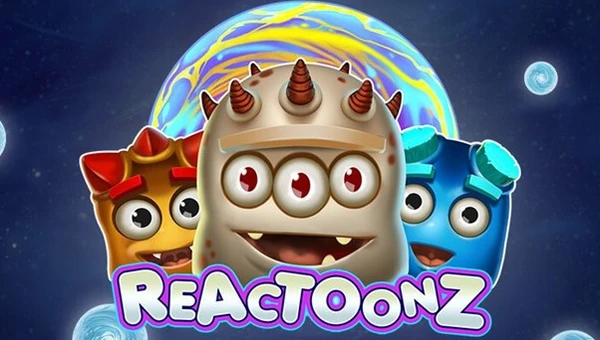
Reactoonz: What Cascades With “Quantum” Features Mean and How to Read the Grid
Reactoonz is one of Play’n GO’s most recognisable grid-based slots, and it still holds up in 2025 because its mechanics are easy to follow once you understand what the game is actually doing. Instead of paylines and spinning reels, it uses a 5×5 grid, cluster wins, and cascades that can chain together in the same paid spin. Many players also mention “quantum” features when discussing Reactoonz, but those are simply the game’s special tools that change symbols, add wilds, or trigger extra effects as the meter fills. This article breaks down how cascades work, what the “quantum” idea refers to in practice, and how to read the grid properly so you understand why some spins snowball and others stop quickly.
How Reactoonz Works: The 5×5 Grid, Clusters, and Cascades
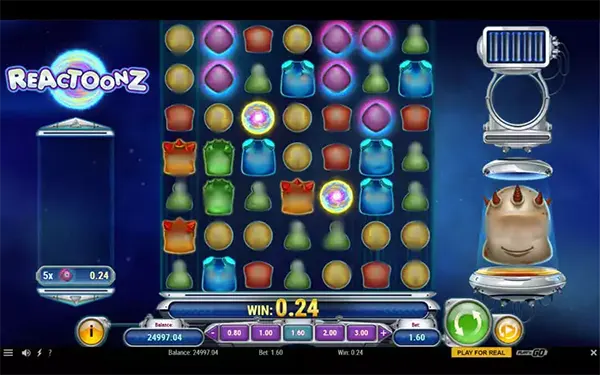
Reactoonz does not use traditional paylines. Instead, you see a 5×5 grid with 25 positions, and wins are paid through clusters. A cluster is a group of matching symbols that touch horizontally or vertically. In most cases, you need at least five matching symbols connected to form a winning cluster. This changes how you watch the game: you’re not checking “left to right” lines, you’re looking for shapes and blocks that can grow.
When a cluster win happens, those symbols disappear, and new symbols fall into the empty spaces. This is the cascade mechanic. Cascades continue until no new winning clusters appear, all within the same paid spin. This is why Reactoonz often feels more active than classic slots: a single click can lead to several rounds of symbol drops and multiple wins, rather than one result and a stop.
To read the grid properly, focus on where partial clusters are forming. If you spot three or four of the same character already connected, that area becomes “high potential” because one or two symbols landing nearby can complete a five-symbol cluster. Over time, you’ll notice the centre of the grid often becomes the key area because it acts like a meeting point where new symbols join existing groups.
What “Quantum” Features Actually Refer To in Reactoonz
The phrase “quantum features” is not a technical term in gambling regulation or game mathematics. In Reactoonz discussions, it usually refers to the science-themed feature system where energy builds up and special effects activate. The game uses a meter that fills as you land particular symbols and create reactions. When it reaches specific levels, it can trigger effects that change the grid in ways standard cascades cannot.
These feature effects are the reason Reactoonz can suddenly shift from small, routine wins to an intense chain reaction. Depending on which stage the meter reaches, the game can add wilds, remove symbols to help bigger clusters form, or create transformations that increase the chance of new connections. The important point is simple: the “quantum” idea is about grid-altering tools that kick in as the game progresses.
If you want to understand Reactoonz as a player, treat “quantum” as shorthand for “meter-driven features”. Cascades and cluster wins help build momentum, and once the meter triggers an effect, the grid becomes more volatile. That is the basic loop: cascades contribute to the feature system, and the feature system can create more cascades.
Why Cascades Can Chain Wins and Change the Volatility
Cascades matter because they effectively increase the amount of symbol action you get per paid spin. In a standard reel slot, the spin resolves once and stops. In Reactoonz, a paid spin can generate several cascades, meaning you may see multiple rounds of symbol drops before the spin ends. That creates more opportunities for clusters and more chances to land the special symbols that charge the feature meter.
Another reason cascades can build strong sequences is grid density. With 25 symbol positions, it is easier for the same character to appear in multiple places at once, which can merge into bigger clusters after a drop. This is why Reactoonz often produces wins in “waves”: the first cluster breaks, the grid refills, and a larger group forms because the new symbols connect parts of the board that were previously separated.
In 2025, the core attraction of Reactoonz is still this mix of clear mechanics and unpredictable chain potential. The volatility is not just about whether you get a win, but about whether a win continues through cascades and whether the meter reaches a feature trigger. That is why you can have long stretches of small reactions, followed by a sudden spin where the grid shifts and produces a much more valuable chain.
How the Meter and Special Triggers Link Back to Cascades
The feature meter in Reactoonz fills through gameplay events, including reactions and specific symbols associated with the feature system. The exact behaviour can vary slightly across different casino implementations, but the underlying design stays the same: more cascades and more reactions generally mean more progress towards a trigger.
When the meter reaches certain thresholds, it activates special functions that directly affect symbol arrangement. These effects can increase the likelihood of large clusters by adding wild symbols, clearing low-value characters, or altering the grid’s composition. That is why the meter is not a separate mini-game — it is connected to cascades, because it changes how easily clusters form in the next drops.
A practical way to watch the game is to look for “near-ready” meter states alongside a grid that already has partial clusters. If the meter is close to a trigger and the grid shows several four-symbol groups, the next drop can create a chain where features and cascades reinforce each other. It is not something you can control, but understanding it helps you follow what is happening instead of guessing.
How to Read the Grid Like a Player: Patterns, Expectations, and Session Control
The most common mistake is trying to play Reactoonz like a payline slot. Here, your attention should be on connected shapes. Blocks and cross-shaped clusters often appear after cascades because falling symbols naturally stack into groups. Over time, you start recognising “hot zones” on the grid — areas where one extra symbol would connect multiple fragments into a winning cluster.
It is also important to keep expectations realistic. Grid-reading improves comprehension, not prediction. You can spot opportunities, but you cannot influence symbol drops. The value is that you stop seeing cascades as random noise and start understanding why one spin ends immediately while another continues for several drops and triggers meter functions.
In 2025, Reactoonz remains widely available at many regulated casinos, and it is still used as a reference point for modern cluster mechanics. Its visual style is playful, but the gameplay can be genuinely high-variance when the meter begins activating multiple features. Players who manage stakes sensibly usually enjoy it more, because the game’s swings are part of the design rather than a sign of “being close” to something guaranteed.
Responsible Play for Cascade-Based Slots
Because cascades can keep a spin running longer than expected, it is easy to lose track of pace. You still pay for each spin, even if the spin lasts through multiple drops and animations. A simple habit is to set a time limit and a fixed spend limit before starting, then stick to them regardless of whether the game feels “active” or not.
It also helps to avoid raising stakes based on emotional cues. A meter close to activation can feel like momentum, but it is not a promise. Chasing a trigger by increasing your bet is a classic way to turn a manageable session into a risky one. A more disciplined approach is to pick a stake that fits your budget and treat feature triggers as occasional events rather than a target you can force.
If gambling starts to feel stressful, impulsive, or linked to chasing losses, it is worth using the safety tools available at regulated operators: deposit limits, time-outs, or self-exclusion. In the UK, independent services such as GamCare and GambleAware offer free support and advice. Understanding a slot’s mechanics can help you play more calmly, but protecting your wellbeing should always come first.
Popular articles
-
 Big Bamboo 2 Slot Review: What Has Changed in Push Gaming’s Sequel
The release of Big Bamboo 2 marks Push Gaming’s attempt …
-
 RIP City (Hacksaw Gaming): Gameplay Mechanics and Risk Profile Review
RIP City by Hacksaw Gaming is a slot that combines …
-
 Trickstar Spins (Yggdrasil): Mechanics, Feature Levels and RTP Explained
Trickstar Spins by Yggdrasil is a five-reel video slot built …
-
 Eldorado Infinity Reels: How Infinity Reels Work and What They Change ...
Eldorado Infinity Reels is built around a reel-expansion mechanic that …