
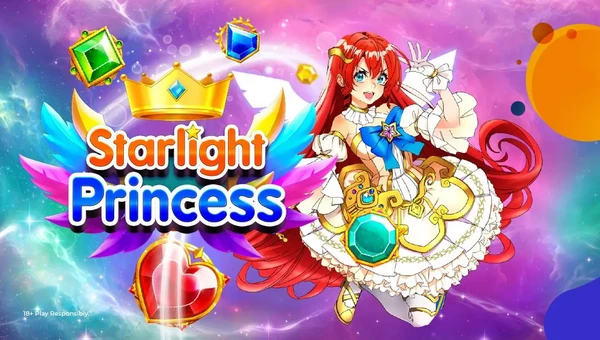
Starlight Princess (Pragmatic Play): Olympus-style multipliers, different tempo and visual delivery
Starlight Princess is often described as “Gates of Olympus with an anime skin”, but that shortcut misses the point. Yes, the underlying engine leans on tumbling wins and sudden multiplier hits, yet the way the game communicates speed, risk, and momentum feels noticeably different in real play. If you like multiplier-driven slots but want a lighter, brighter presentation and a slightly different rhythm to the action, this is one of Pragmatic Play’s clearest examples.
Core structure: cluster pays, tumbles, and what a “win” actually means
Starlight Princess runs on a 6×5 grid with cluster pays rather than fixed paylines. That means you’re not hunting left-to-right line matches; you’re looking for groups of matching symbols that hit the minimum count for a payout. In practical terms, this changes how you read the screen: your attention shifts from “where is the payline?” to “how likely is a chain reaction after a tumble?”
When a cluster lands and pays, those symbols disappear and new symbols drop in from above (tumbling/cascading). The interesting part is not the first hit, but what comes after it. Many spins are quiet, then you suddenly catch a tumble sequence that creates a second cluster, then a third. The game’s personality shows up here: it’s built to create short bursts of activity rather than a steady trickle of small wins.
Because the grid is tall and the symbol mix is fairly “busy”, you’ll see plenty of near-misses. That’s normal for high-volatility maths. The clean way to judge a session is not “how many spins paid something”, but “how often did a spin turn into multiple tumbles, and how often did a multiplier land at the right moment?”
Multiplier symbols: the Olympus-like hook, explained without hype
The multiplier mechanic is the headline feature: multiplier symbols can land and apply values from 2x up to 500x when they connect with a paying cluster. The key detail is that multipliers matter only when they’re part of a win sequence. A big number on-screen is meaningless if the spin doesn’t produce a qualifying cluster alongside it.
This is where Starlight Princess feels “Olympus-style” but also slightly less theatrical. The multipliers still arrive as sudden, high-impact events, yet the presentation is sharper and lighter, which can make the same mathematical swing feel faster. Players often interpret that as “quicker tempo”, even though the underlying volatility is still firmly on the high side.
In free spins, the dynamic changes: multiplier values can stack into a combined multiplier during the feature. Instead of hoping for one standout multiplier at the perfect second, you can get a series of smaller multipliers that add up, and that shift in texture is one of the most important differences between base play and the bonus.
Free Spins and volatility: where the game actually decides your session
The Free Spins round is triggered by landing enough scatter symbols (commonly 4 or more) anywhere on the grid, awarding a standard set of spins (often 15). This is the point where the game stops teasing and starts showing what its maths model is built for: longer tumble chains, multiplier stacking, and the kind of outcomes that can reshape the entire balance of a session.
Volatility is best understood as “how long it can stay quiet before paying properly.” Starlight Princess is widely categorised as high volatility, which typically means you should expect stretches that feel unproductive, then a sudden correction via one strong tumble chain plus a meaningful multiplier. That’s not a bug; it’s the design.
In 2026, you’ll still see the RTP commonly listed around 96.5%, but you should treat that number as “often available” rather than a guarantee at every operator. In the wider market, some providers can offer alternative RTP settings for the same title, so the safe habit is to check the game info panel (or rules page) before you commit serious money.
Tempo in practice: why Starlight Princess feels different from Olympus-likes
Even with a near-identical core idea, the tempo feels different because the game communicates outcomes differently. Visual cues are brighter, symbols are clearer, and the moment a multiplier hits, it’s less “heavy drama” and more “instant snap.” For some players, that makes sessions feel quicker and more modern, even when the balance curve is just as spiky.
Another tempo factor is psychological: the anime theme and upbeat effects can make long dead stretches feel less oppressive, which can tempt people to extend a session without noticing time passing. If you know you’re prone to chasing swings, this is a game where a timer or a firm session limit is genuinely useful.
A practical approach is to pre-decide your “unit size” and stick to it. High-volatility multiplier slots punish random bet increases. If you want to raise the stake, do it at the start of a session and accept the new risk profile, rather than adjusting mid-run because the last 50 spins were flat.
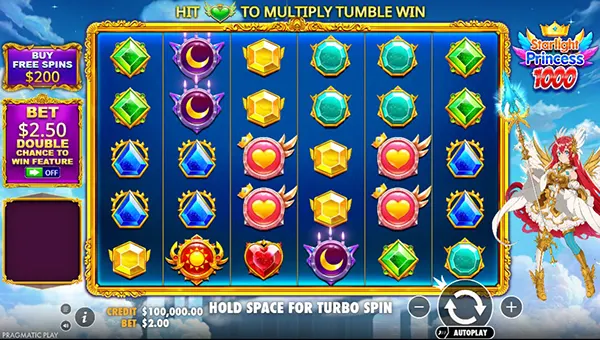
Visual delivery, usability, and how to play it responsibly in 2026
Starlight Princess is deliberately clean: the background is soft, the grid is easy to read, and the game doesn’t overload you with extra side mechanics. That simplicity can be a strength if you like focused gameplay. It also means the entire experience is carried by three things: tumble flow, multiplier timing, and the free spins feature.
On mobile, the cleanness helps, but it also raises a real-world risk: misclicks. If the operator interface places quick-spin or auto options close to the stake controls, it’s easy to tap the wrong thing. Taking 20 seconds to set your speed preferences and confirm the bet before a long run is dull but sensible.
Finally, keep perspective on what “max win” means. The game’s ceiling is often cited at 5,000x the stake, but outcomes near that level are rare by definition. Treat Starlight Princess as entertainment with occasional high-impact moments, not as a reliable way to reach a specific target.
Quick decision guide: who this slot suits, and who should skip it
This slot makes sense if you enjoy high-volatility play, you like tumbling mechanics, and you’re comfortable with sessions that can feel quiet for long stretches. The payoff pattern is “few but meaningful” rather than “many small hits.”
You should probably skip it if you need frequent feedback from a game to stay in control. Multiplier slots can encourage “one more spin” thinking, especially when the feature is close and the screen keeps hinting at potential. If that’s a known weak spot for you, lower-stakes play or a lower-volatility title is the safer choice.
If you do play, build simple guardrails: set a budget, set a time limit, and avoid increasing the stake to compensate for a dry run. Starlight Princess is at its best when you respect its variance and let the maths do what it’s designed to do—without trying to force it.
Popular articles
-
 Fury of Anubis Slot Review (2026): Features, RTP, Volatility and Gamep...
Fury of Anubis is a video slot developed by Pragmatic …
-
 Wanted Dead or a Wild: Why the Hacksaw Gaming Slot Is Frequently Discu...
Few online slots released in recent years have generated as …
-
 Junkyard Kings 2 Slot: What Has Changed in the Sequel
Junkyard Kings 2 is the follow-up to the original Pragmatic …
-
 3 Buzzing Wilds by Booongo: A Detailed Look at a Classic Slot with Mod...
3 Buzzing Wilds by Booongo stands as an example of …